

News & Event
Our group developed to three factories, which is specialized in producing PVC PANEL, PVC FILM and WPC.
The Evolution of PVC Ceiling Panels: From Inception to Modern Applications
Editor:Haining Haowang Group Co.,Ltd. │ Release Time:2024-05-17
Introduction
PVC (Polyvinyl Chloride) ceiling panels have revolutionized the construction and interior design industry. Known for their durability, ease of installation, and aesthetic versatility, these panels have undergone significant evolution since their inception. This comprehensive exploration of PVC ceiling panels will delve into their historical development, technological advancements, varied applications, and future prospects.
Early Beginnings
The Birth of PVC
PVC, or polyvinyl chloride, was first created in the 19th century, with the polymerization of vinyl chloride discovered by German chemist Eugen Baumann in 1872. However, it wasn't until the early 20th century that PVC began to be commercialized. The material's versatility and durability quickly found applications in various industries, from plumbing to electrical insulation.
Introduction to Building Materials
The use of PVC in construction began in the mid-20th century. Initially, it was utilized for plumbing pipes and window frames due to its resistance to moisture, chemicals, and corrosion. The transition of PVC into ceiling panels was a natural progression, driven by the need for affordable, durable, and easy-to-maintain building materials.
Development of PVC Ceiling Panels
Initial Designs and Applications
The first PVC ceiling panels were simple, functional, and focused on practicality rather than aesthetics. They were primarily used in commercial and industrial settings where hygiene, moisture resistance, and ease of cleaning were paramount, such as hospitals, laboratories, and kitchens.
Early Manufacturing Processes
Early manufacturing processes for PVC ceiling panels involved extrusion and molding techniques. Extrusion allowed for the production of long, uniform panels, while molding enabled the creation of more complex shapes and designs. Despite their practicality, these early panels were often criticized for their lack of aesthetic appeal.
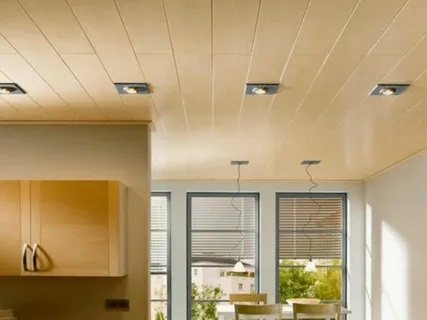
Technological Advancements
Enhanced Aesthetics
As demand grew, manufacturers began to innovate, improving both the appearance and functionality of PVC ceiling panels. Advances in printing technology enabled the production of panels with realistic wood grains, marble patterns, and other decorative finishes. This broadened their appeal, making them suitable for residential as well as commercial applications.
Improved Manufacturing Techniques
Technological advancements in extrusion and lamination processes allowed for greater precision and consistency in panel production. The introduction of co-extrusion techniques enabled the combination of multiple layers, enhancing the panels' structural integrity and aesthetic finish.
Integration of Fire Retardant Properties
Safety considerations led to the development of fire-retardant PVC ceiling panels. These panels were treated with flame retardant additives, making them suitable for use in public buildings and areas where fire safety regulations were stringent. This innovation significantly broadened the market for PVC ceiling panels.
Lightweight and Easy Installation
One of the most significant advancements was the reduction in the weight of PVC ceiling panels. Modern panels are lightweight and designed for easy installation, often featuring tongue-and-groove or click-lock systems that simplify the process. This development made them an attractive option for DIY enthusiasts and professional installers alike.
Expansion into New Markets
Residential Applications
With improved aesthetics and ease of installation, PVC ceiling panels became increasingly popular in residential settings. Homeowners appreciated their versatility, durability, and low maintenance requirements. They began to be used in living rooms, bedrooms, bathrooms, and kitchens, offering a stylish and practical alternative to traditional materials.
Commercial and Retail Spaces
The commercial sector also embraced PVC ceiling panels for their cost-effectiveness and aesthetic flexibility. Retail spaces, offices, and hospitality venues utilized these panels to create visually appealing environments while benefiting from their durability and ease of maintenance.
Specialized Applications
PVC ceiling panels found specialized applications in environments requiring high levels of hygiene and moisture resistance. In addition to hospitals and laboratories, they became popular in food processing facilities, pharmaceutical manufacturing, and swimming pools, where their properties provided significant advantages.
Modern Innovations
Acoustic Properties
Recent innovations have focused on enhancing the acoustic properties of PVC ceiling panels. Sound-absorbing materials and designs have been integrated into the panels, making them suitable for use in environments where noise reduction is important, such as offices, conference rooms, and public buildings.
Eco-Friendly Materials
Environmental sustainability has become a critical consideration in building materials. Manufacturers have responded by developing eco-friendly PVC ceiling panels, incorporating recycled materials and using more sustainable production processes. These panels offer the same benefits as traditional PVC panels but with a reduced environmental footprint.
Digital Printing and Customization
Advances in digital printing technology have further expanded the aesthetic possibilities for PVC ceiling panels. High-resolution printing allows for intricate designs, vibrant colors, and even custom images to be applied to the panels. This customization option has made PVC ceiling panels a popular choice for personalized and unique interior design projects.
Integration with Smart Technologies
The integration of smart technologies into building materials is an emerging trend. Some modern PVC ceiling panels come equipped with embedded LED lighting, sound systems, and even climate control features. These integrated systems provide enhanced functionality and convenience, making PVC ceiling panels a key component of smart home and building solutions.
Future Prospects
Continued Innovation
The future of PVC ceiling panels is likely to see continued innovation in materials, design, and functionality. Research and development efforts are expected to focus on enhancing the environmental sustainability of PVC, improving acoustic and thermal properties, and integrating advanced technologies.
Expanded Applications
As new technologies and materials are developed, the range of applications for PVC ceiling panels will continue to expand. Potential future applications include use in modular construction, prefabricated buildings, and even in outdoor environments where durability and weather resistance are crucial.
Market Growth
The market for PVC ceiling panels is projected to grow as awareness of their benefits increases. Emerging markets, particularly in developing countries, are expected to drive demand as these regions continue to invest in infrastructure and housing development.
The evolution of PVC ceiling panels from their inception to modern applications showcases a remarkable journey of innovation and adaptation. From basic, functional panels used in industrial settings to highly customizable, aesthetically pleasing options for residential and commercial spaces, PVC ceiling panels have continually evolved to meet the changing needs of the market. As technology advances and environmental considerations become increasingly important, PVC ceiling panels are poised to remain a versatile, durable, and sustainable choice in the world of building materials.
主站蜘蛛池模板:
国产偷国产偷亚洲高清人乐享|
亚洲欧美一区二区成人片|
国产精品无码天天爽视频|
亚洲综合另类|
日韩无套内射视频6|
999精品视频|
亚洲中文字幕一区二区|
国产伦码精品一区二区|
在线无码免费的毛片视频|
成人做爰A片免费看网站草莓|
国产精品福利在线观看无码卡
|
欧美人妻精品|
亚洲色欲网|
国内揄拍国内精品人妻|
久久永久视频|
亚洲男人天堂av在线|
av中文天堂|
久久人妻乱|
日产精品一区二区免费|
亚洲av色香蕉一区二区三区精品|
欧美日韩a|
部精品久久久久久久久|
人人妻人人做人人爽|
丰满熟女人妻一区二区三|
免费无码又爽又刺激网站直播|
日本中文字幕乱码免费|
亚洲国产AV无码综合原创|
日日摸夜夜添夜夜添国产三级|
精品一区二区三区蜜桃久|
亚洲乱码中字幕综合|
亚洲人一区|
亚洲综合色在线视频WWW|
国产精品国产三级国产试看|
亚洲中文字幕一区二区|
三级4级全黄60分钟|
午夜天堂av|
日韩中av免费在线观看|
日韩人妻精品中文字幕免费
|
国产精品进线69影院|
免费偷拍|
亚洲精品无码专区|